Monday, November 10, 2014

Continuously Re-Distribute Ounces Of Cheap Cultural Preparation ... Or Pound Ourselves With Expensive Cultural Rehab?

If you've ever wondered how natural selection can proceed, if we don't always produce enough diversity beforehand to select from after the fact ... then read on. In the end, this should also remind any thinking person of the need to provision culture with distributed spending first ... and clawing back (capitalism) later. In fact, both those examples illustrate one, singular logic. Sow widely, to reap adequately.

Now let's diverge, so we can find some new circuits leading back to the same path.

Do you like puzzles? How about this one?

What links '60s rock music, parallel Roger Ericksons, Korzybski & Wittgenstein, LSD, network logic and capitalism?

Why, with a few extra links, this does! You'll laugh when you see how.


This is actually fascinating, not just comical.


"Science And Sanity", by the Polish-born mathematician Alfred Korzybski
5th edition (Institute Of General Semantics, New Jersey)

All this rehashed in a 1967 acid-rock album - written by a chem-engineer student! :)

"Since Aristotle, man has organized his knowledge vertically", the famous liner notes differ markedly from the juvenile poetry/hype that made up the average 1966 rock LP back covers. Written, though uncredited, by Tommy Hall, the liner notes go on to observe that our language has been used primarily to identify - and consequently distinguish between - objects, rather than to focus on the relationship between them. Such a way of thinking, Hall states, is keeping man from enjoying the perfect sanity which comes from being able to deal with life in its entirety. 
The terminology is Korzybskian, but the implementation is brand new. It definitely wasn't something they would teach you at alcohol drug rehab.
Hilarious! Who knew what acid-rock was really all about!
"The goal is to resystematize our knowledge so that it would all be related horizontally."
Ironically, they may have missed the point, and been wrong all along, by assuming the solution was to go too far in either direction.

Why? This story makes you wonder if the supposed appearance of dialectic mainly in Indo-European cultures was an accident of the discovery - or wide-spread use - of certain psychedelic drugs.

After all, many other tribal languages never embodied the distinction of simplified summary mappings and classifications vs coordinating ALL objects, and hence didn't NEED dialectic. :) 

The two strategies impose different amounts of complicated overhead, at different scales. 

How and why? Consider this. The process of sensory system evolution is always to reduce sensory-receptor bandwidth to that minimal range allowing adequate navigation. Humans, for example, didn't need ultraviolet or infrared vision, or ultra-sonic hearing or echo location to survive. We forsook those individual skills and instead invested in a more complex neocortex allowing more post-processing of limited-frequency sensory input.

If we apply that analogy to human language and human culture, not just human physiology, then a similar conclusion is apparent. The key to navigating increasingly complex cultural contexts with lean linguistics may be to limit group-discourse bandwidth & focus cultural-cognition on that skeletal backbone of context which is adequately vs totally relevant. 

To scale up any system, some micro-level features have to be sacrificed, as useless burdens on macro agility. No system scales unchanged.

The evolutionary advantage of aggressively "classifying" languages & cultures may be their ability to focus on what does vs doesn't scale, and hence allow accelerated evolution.

For those unfamiliar with these analogies, try using another, more similar one. There are advantages of delegating some aspects of micro vs macro context management to dedicated specialists, such as human genders - where "males" cannot possibly master the details of pregnancy & neonatal care, while "females" cannot as deeply grasp the details of large territory management - not to mention the many segments in the spectrum between those and other arbitrary behavior sets.

If nothing else, visualizing those system anomalies as necessary features, and not unwanted bugs, points out that arguing for either paternalistic or maternalistic cultures misses the bigger context. Rather, all human cultures feature interleaved as well as interdependent maternal & paternal subcultures, as well as all the intermediate variants demanded for retaining resiliency, via biological diversity.

Meanwhile, back to our Texas pyscho-rockers.
"In an intellectual quantum leap he suggested a modern and tangible way to effectuate the non-Aristotelian lifestyle that remains painfully abstract in Korzybski - psychedelic drugs."
Too bad that didn't work out for them. Being narrowly educated, they weren't aware of the different mental health dangers of disrupting basic neural-reward systems vs the more diffuse psychedelic (peripheral neural-ordering?) drugs.*

Intellectual quantum leap? Or tragic, juvenile generalization?


Their mistake - mixing heroin & LSD- was as fundamental as not appreciating the differing repercussions from tampering with foundation/plumbing/electrical building codes vs experimenting with interior design. Sad, but true.

Pity we can't get back to simply providing all students with:

1) awareness of infinitely changing & fleeting contexts;

2) familiarity & comfort with navigating change, as Context Nomads, and

3) joy in surfing accelerating change with boundless curiosity & fascination, PLUS

4) enough early feedback to appreciate the difference between foundations, and frontiers of exploration.
Why is it proving so difficult to have our growing culture and keep it too?


That observation holds for group brains as well as groups of neurons, i.e., an individual brain. Does that vaguely remind you of our two political parties? Even if in different ways at different times.

Perhaps the core purpose of cultural politics is to keep a population in the survival zone within the closed circle spanning passive-aggressive belief and anarchic-repressive cynicism?


* However, being at an early stage of cultural-dialectic, it might well be useful to imagine what the cultural equivalent of cultural-psychedelic drugs are. Diversity in student travel during their critical periods of cognitive development, their formative years?


Friday, November 7, 2014

How Does A V330million Cultural Engine TUNE Itself? Cultural Adaptive Rate And Public Discourse Bookkeeping.


A bit of yellow journalism triggered the following tongue-in-cheek discussion with colleagues, which quickly ran into a bigger question. Maybe all discussions do, when we take a moment to actually think?

First, the trigger.
[Russia Says] "It’s now total war against the BRICS"
Maybe. Or maybe this just propaganda meant to counter OUR propaganda against Russian policies, funded by our MICC (indirectly of course). Anything goes, but just don't try bombing or otherwise meddling in any country not called Palestine, Iraq, Afghanistan or Syria.*

(* note; this list may be altered w/o warning :( )
(** we [& Israel] reserve the right to attack anyone we like, including ourselves)

One response, from a US journalist & engineer: 
"This RT article is so full of half-truths that anyone who read it is now dumber" Steve H
Another recent comment, from a colleague in Lithuania: 
"I'm more worried about the ECB than about Russia."

Follow up, and the immediate question "How could we be smarter?":
Yes, & well said, Steve! :)

If this increases RT's viewer base in the USA ... that'll probably be a maladaptive outcome overall.

Good thing Fox News is so much better! :(

Between our existing media factions, we might well end up with an effectively misinformed electorate.

Who gains then, however transiently (as the parasites slowly kill their host)?

Meanwhile, it's a good thing that adaptive people (mostly youth) are abandoning archaic forms of media, and turning to the increasing diversity of blogs to post & sample bigger samplings of our emerging distribution of public feedback & discourse.

If it weren't for public forums & public blogs, most of us would never have met an increasing proportion of the people we now know. Yes, we as a people are STILL increasingly moving on-line.

Yet there are PhD scientists who loftily proclaim that the internet can never replace academic journals - and that blogs should therefore be outlawed. [Same outlook that once said battle-tanks couldn't replace horses?]

Just because evolution isn't finished yet, that's no reason to not participate in it. 

In fact, we need to focus much more on our own adaptive RATE.

This whole topic of journalistic quality runs immediately into a bigger question:
How can we materially improve the QUALITY (including both participation rate and tempo) of distributed decision-making?

As just two little, suggested points of bookkeeping, wouldn't it be useful to keep a real-time tally of all the newly emerging FUNCTIONS clamoring for our attention - AND, to provide real-time access to notices of said events, to all people?

Let's look at it this way. Biology, business & military thinkers mostly seem to agree that evolution involves a constant, known cascade of events:

1) context always changes;
2) systemic awareness of things WE have to start doing differently;
3) systemic spawning of NEW FUNCTIONS to address new demands;
4) adjusting all OLD/NEW FUNCTIONS (& sometimes eliminating a few), in order to tune all to common task [cultural evolution].

If we're always struggling so much w #2, how the hell is group intelligence ever supposed to accelerate handling of #'s 3 & 4?

No wonder there's so much friction ... and attendant mayhem. 

If distributed feedback on net outcome lags ... then there are distributed frictions, and net tuning lags. That's a given.

To focus more group attention & effort on #'s 3 & 4, surely we need to make #2 a much more Automatic Stabilizer. That's a given. Nothing we didn't know in 1776 (i.e., a more informed electorate). We've been spinning our wheels, for 229 years?

A group brain is a terrible thing to waste, but that's what we're still over-focused on doing - by default.


What defines "cultural health?" How about retention & growth of net Adaptive Rate? Wallace & Darwin pointed that out 150 years ago. Is anyone listening?

How do we maintain & grow Cultural Adaptive Rate, if we don't practice measuring it? Here's one quick suggestion. We may need far more Public Discourse bookkeeping.

Couldn't every person's day start with access to a chart SUMMARIZING the entire spectrum of FEEDBACK on a hierarchy of "Emerging National Options To Explore?"

Not everyone would look every day, but at least everyone would always know that some attempt at hierarchical rankings of that still-cresting river of group options was always there?

That might even restore faith in the utility of having a US Congress. :(

Maybe more of us would periodically dip their toe in that river, & get sucked into participating in #s 3 & 4, on the basis of some hierarchical feedback ranking. That way we'd at least attempt a continuous ranking that systematically reduced frictions, rather than one that constantly increased frictions, via purely random, un-tuned participation?

How else does a V330million cultural engine TUNE itself, if not by seeking a constantly changing, dynamic balance between the full spectrum of enticing new options and the full spectrum of emerging frictions?

Tuesday, October 14, 2014

Just Do The Little Things That Make It Harder For All Citizens, Everywhere, To Work At Cross-Purposes?

Periodically, we can't help seeing all the way through.

When that happens, it's always a bit deflating to see even revered elites revealed as logically challenged at times. Yet even that shouldn't scare us. We need our audacity as much as our security.

What are we seeing through this time? Several items, through the eyes of one man, as well as his known history. It's a compelling, revealing snap-shot, with multiple elements of partial truths compromised by a history of countermanding errors - by many people.

See the photo and URL. This approach sees part of the problem, but misses the point.

There is a better way.
"Just do the little things that make it harder for citizens to work at cross-purposes." Col. Casey Haskins (US Army, Retired)
That's what evolution, aka Natural SELECTION, aka OBT&E is all about.

It is NOT about kicking anybody out.
(A portion of all people everywhere, at all times - even a portion of ourselves & our own kids - are always misbehaving, and misguided. Do we kick them all out, and swap 'em for those that other countries kick out? No matter WHAT we do, we'll just recreate a similar range of challenges and options, in one generation. That's the penalty for enjoying the benefit of massively parallel recombination, cultural or sexual.)
Instead, it's about listening to our own logic, instead of to pea-brains, and practicing forbearance while exploring - and selecting - better options. How? We always need even newer methods to do just that, & can discover them ONLY by initiating enough distributed trial & error. It's not about having insights, or being partially right. It's about seeing all the way through, to even better options, plus better methods for achieving those Desired Outcomes.

"One day after I am long gone, you will remember me and say, we should have stopped the nuclear program of Israel, abolished the Federal Reserve and kicked all secret societies, occultists, usurpers and Zionists out of our wonderful country, to keep it that way, but it is never too late, just remember that." 
[I don't know who that's from, but it's not from JFK, as some have claimed. It doesn't matter, since it misses the deeper point altogether.]

Trading Royalty for Banksters for Racists for Trusts for Nazis for Zionists for Banksters for Neo-Liberals? Is that the national process history of the USA, and what our electorate argues itself to a standstill over?

Isn't there a better way than just enduring a cyclical trap of orienting to create, then combat, then re-create successive Innocent Frauds & overt Control Frauds? We're afraid of our own shadows, and panicking, instead of just managing our constant combination of fears and options.

Which approach do we choose?
Passive NonCompliance - after ceding tempo?
     Or
Active Outcomes-Based Practice - while seizing & maintaining initiative?

Why are a tiny # of sociopathic pea-brains usually able to keep 90% of humanity confused, divided & conquered?

Only because we're not aggressively PRACTICING listening to all of ourselves, all of the time - so that an adaptive hierarchy of options worth exploring is always and automatically sorted and distributed, soon enough to matter?

Mal-adaptive ideas are never our core problem. 
In fact, the combination of having them and then trying to eradicate them instead of just ignoring them is our greater failing, and a self-inflicted wound! 
Mal-adaptive ideas are a constant, from an infinite source. 
Success lies in constantly & QUICKLY surrounding mal-adaptive ideas & outcomes with enough adaptive ideas to make the distinction obvious, early and often enough to steer ongoing outcomes.
After all, our goal is to SELECT more adaptive ideas than mal-adaptive ones.

Just make it easier to bias our selection in one vs the other direction.

Doing the little things that make it harder for citizens to work at cross-purposes ... is the same as doing the little things that make it easier for citizens to coordinate, at any scale.

Those two, desired practices support both goals, and reduce to the same practice set.

We need a Bias To Adaptive Outcomes, from coupling a Bias To Action PLUS a Bias To Full-Feedback Selection.


Monday, October 13, 2014

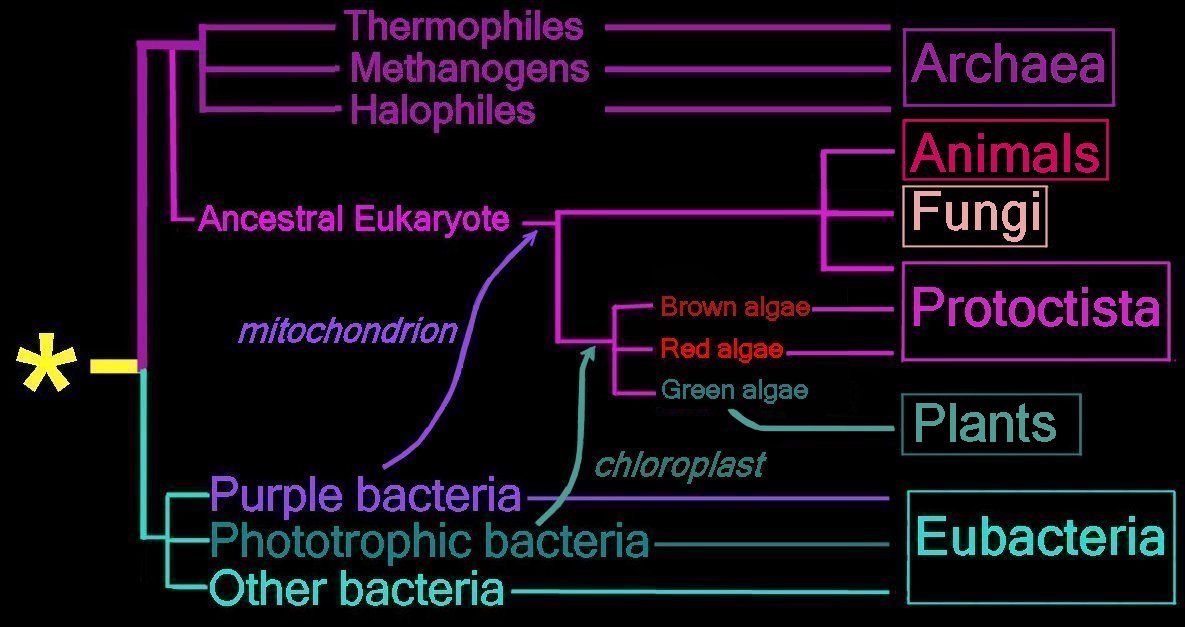
New Methods Will Allow Us To Be Not Just Eukaryotes, But "Eu-Culturotes" Too. So What Would A Eu-Culturote Human Aggregate Look Like?

We know quite a bit about our own ancestry now, yet we don't often stop to think about the implications, and the options we have when considering where to go from here.


Ever wonder what the next step will be in biological - and human cultural - evolution?

If you review our history, you'll instantly consider how we'll transition to massively multi-cultural aggregates, not just massively multi-cellular physiologies.

Are we there yet? Not even close, yet there are clear signs that we're bumping up against the limits of our old, cultural methods. Take academia, PLEASE! :)
How Academia Resembles a Drug Gang
Why? An old joke has it that the reason the infighting and backstabbing in academia is so vicious ... is because the stakes are so small. :( Yet that only begs the question of why things got that way.

So why are the stakes so small, and dwindling, not just in academia, but in many other necessary but not sufficient existing and constantly emerging disciplines too, each with diverging, academic training sub-professions?

This academia question is just a perennial one of a nested series of questions. Why do the past decisions of any complex system end up dictating subsequent adaptive paths?

It seems that we have "building codes," licenses & standards protecting every institution and discipline EXCEPT the institution of coordinating a whole greater than the sum of ALL regulated parts.

You couldn't make this problem up, partly because it's causes are so simple, well studied, and well-neglected.

Without universal feedback & regulation (everything connected to everything), it soon doesn't matter HOW MUCH local & regional cross-talk, feedback & self-regulation there is within silos. The mounting aggregate_dysfunction degrades all silos indirectly, no matter how much we overspend & overbuild some components, while letting aggregate coordination degrade.

And yes, we're full of contradictions. We've learned that lesson deeply for, say, manufacturing cars, but won't apply it to our own national policy and culture.

What was that Irish proverb?
"It is in the shelter of each other that the people live."
And without that shelter, it doesn't matter how much we try to protect ourselves FROM one another? Right? Just like with cars. There's no point in building, say, SUPER-RADIATORS into cars, when it's so much more adaptive to simply adjust all the other car components, so that a mundane radiator never receives that much stress. Distributed tuning always trumps local heroics. Or, the return-on-coordination is always the highest return of all.

How is it that 7 billion people can no longer retain "knowledge" that all tribal sub-sections "knew" all along? Not to mention all the implicit corollaries, traditionally left unstated, as rather obvious?

Somehow, it's our own scale-dependent practices that are limiting us. Only ecologists (& internet engineers, & OpenSource chums, & circuit/chip designers) seem to teach that un-coordinated extensions cause more risk than reward to the parent system producing the spawn.

All other disciplines seem to live in a world blind to the fundamental need for recursive tuning of all our selves as a whole, not just our various parts in isolation. Why we're continuously tempted to allow ourselves to do that to ourselves ... is a mystery to me.
A bias to adapt = a bias to recombinant action .. CLOSELY COUPLED ... to a bias to recursive tuning.
And yet that coupling is NOT as closely regulated as all sustainability theorems expect. Either Darwin missed a subtle point, and over-stated his case ... or combinatorial approaches to spawning/mobilizing/selecting/leveraging leave unexamined process-control challenges, which escalate faster than aggregates can - until the next novel breakthrough occurs.

Which leaves us with several, initial, intriguing responses to our initial question. The sky's the limit, folks.

First, maybe all human suffering, waste & lost output ... is simply the truly expendable noise in our selection process? Perhaps there's really not enough selective pressure to demand higher levels of performance. Thus maybe we're just not yet adequately prodded us to SELECT the next level of self-process-control invention? Not prodded? Or simply not motivated, or bright enough recognize and explore existing options? That reality cuts both ways. We can adapt voluntarily, out of curiosity & drive, or wait until we're forced to, kicking & screaming.

So far, most humans take the easy way out, and sit in over-built professions producing an excess of stuff which we really don't need .... while their pod of perceived safety inevitably (but slowly) degrades around them. Others go for broke, and are surfing disciplines more aggressively. Surfers have more fun? And trade more fun for less security, noting that "fun" = degeneracy = behavioral variance?

Second, some breakthrough organizational method will eventually occur, equivalent to cultural-siRNA, that will allow us to coordinate our growing numbers better/faster/leaner. Then we'll become a massively parallel multicultural entity, expressing recombination on yet another scale. Not just eukaryotes, but "eu-culturotes" too! :)

What will the cultural analogues of prokaryotes, archaea and eukaryotes be?

There are key, methodological steps which allowed the differing capabilities of our ancestors. (For those interested, the archaeal genetic replication elongation complex, which is known as the replisome, is eukaryotic in nature, allowing the beginning of more complex genomes, more complex membranes, and single cells with more features. Google archaeobacteria for what's known.) 

What will be the key methods allowing further diversification of human aggregates in the future?


What would a Eu-Culturotic human culture look like?

As one analogy, perhaps human tribes are "pro-culturotes?" Nation-states are "archae-culturotes?" :)  And eu-culturotes are ..... ? Your guess is as good as mine.

So. How would we go about making and testing prototype eu-culturotes, out of prior pro-culturotes and archae-culturotes? We have theoretical options to build upon.


And LOTS of methods to work through!

When hosts engulf competitors or parasites, the host, the parasite, or both usually die. If the host successfully captures and fully regulates or domesticates the parasite, however, novel vistas open up.

Has YOUR community engulfed a bankster, or entire banks, yet, and lived to tell about it? How about some lobbyists? Or a MICC? It'll happen, one way or another, if we're to survive. The only question is who will find new methods, and a way to make it happen.

How do YOU define liCFRM?*

The glory really will go to those communities that find a better way.


*  lean, inhibitory Control Fraud Regulatory Method


Wednesday, October 8, 2014

MacroEconomics: The Simple PRACTICE Of Re-Orienting All Eyes Onto Emerging Aggregate Options.

Is it just rigorously managing the supply of transaction denomination units? DON'T MAKE ME LAUGH!


Every time I read some dimwit, orthodox macro-economics discourse, I still end up wondering what it is, exactly, that we're running out of.

A line from one of the "Change" songs keeps coming back at that point too.
"I been around the world once or twice before,
And there's an old Irish tribal proverb that also fits. "It is in the shelter of each other that the people live." Well Duh! That's what social species do, and in fact, all members of all ecologies.

So suddenly, once there are too many of us for our own wits to handle, we're no longer shelter to each other? Something doesn't add up here.

It must be our wits and behaviors, not our physical capabilities, or possessions that are degrading our median quality of life.
"When you change the way you look at things, the things you look at will [appear to] change."  Max Planck(?)
It's the scale, dummy? The more people we have, the bigger the tent we can hold up? Yet cultural tent design at one size does NOT scale, unchanged to provide cultural tent design at a different cultural scale.
"Much of the difficulty in reconciling scale-related axioms arises from CONFUSING MICRO-SCALE AND MACRO-SCALE INTER-RELATIONSHIPS." Max Planck
It's a mystery to me why we as a people struggle so much to see the superior value of more coordination, rather than more stuff.

We're so close!

How? Because almost everyone I meet already values their learned knowledge of how SOME relatively complex process works, and hence they don't sweat the ingredients. Ever seen a homemaker hoarding flour, or yeast, or salt, or ovens ... to ensure forever their capability to make bread? They know that that don't make no sense. Or mechanics trying to corner the market on nuts and bolts, for their retirement? No. They all grasp process scale, at least to some degree.

And yet we're still so far!

How? Because, to a person, those same people:
they just don't see our nation and electorate as just another process! 
They just haven't gotten used to seeing the bigger scale. It only takes practice, but they aren't getting enough of that practice yet.

Hence, they get sidetracked and completely swallowed up in hoarding, to gross excess, various ingredients that go into making "us" - a dynamic human culture that is much more than the sum of it's parts. For example, they all foolishly agree to hoard each other's transaction denomination units, for retirement - like athletes trying to hoard the "scorekeeping points" which their leagues create at will. 

Weepin' Jesus! Can't see dessert for all the Ding Dongs? Join the throng failing to recognize itself in the mirror.

It's astounding.

It's not the parts, dummy, it's the whole! Perhaps another addition to the books for dummies series might help.
Wholes, for Dummies! :)
Perhaps, but only if it was embedded in every year of our K-12 curriculum.

The backlog of stuff we already know about current human-culture recipes is so astoundingly large that it's either ignored or it actually gets in the way as institutional momentum or bureaucracy, as does our stockpile of ingredients.

Offer people a little bit of corn or butter, and they'll buy it all up. Give them unimaginable corn surpluses, or Butter Mountains, and they'll pay to have it hauled away for compost ..... and never examine the change in logic that accompanied the change in scale.

Every nomad understood this implicitly, 100,000 years ago. Say there are are 4 food sources, which appear at 4 times of the year, in 4 different places. First, ACTIVE nomads quickly find them all, and optimally use those resources. Is there enough for all, and excess? Always, but it required some travel.

You can picture that eventually, some lazy idiots started building fences around every new, transient resource discovered, in attempts to corner that market. Most would sit on it all year, trying not to starve between times it would blossom. Economic civil warfare began, along with leverage and enslavement. Local outcomes sometimes looked good to the dimwits withholding from the aggregate, rather than helping to keep the aggregate eye on aggregate options. Soon the net Output Gap was recognized, and it began to steadily grow.

The ongoing outcome? New layers of nomads eventually realize that their food source has become the people sitting behind the fences. Hence, the proverbial barbarian waiting at every misguided gate. Aggregate civil war escalated into unending civil war. Amazingly, aggregates grew despite themselves, but always slower than they could have. Sometimes MUCH slower, even briefly reversing the course of cultural evolution. Nevertheless, even our own genius idiots can't keep our resilient Middle Class down forever, no matter how hard they try.

This pattern continued until we witnessed the inevitable next link in that chain of idiocy.
Neo-Liberals attempting to build fences around distributed, public fiat, so they can sit on it.
BMHOTK! That's the final stage of "perfecting" the theory of idiocy, before it's tossed in the garbage bin, for good.

All our resources - including our denomination units - are all meaningless, without ability to see our emerging context.
"Those cultures are richest who can best explore emerging options soonest, with the least of their old baggage." That's my take.
Yes, countless superficial thinkers keep insisting on simple changes to our imagined cultural recipe - even though it's obvious that there cannot possibly be any isolated, simplistic solutions.

Yet there is nevertheless always something simple that's missing. It's just too subtle for most people, but ONLY because we don't teach the obvious. In fact, we train people out of seeing the obvious!

To make things easier on ourselves, we just have to re-orient our orientation coordinates to see our own evolving culture in a simpler light. No context seems simple until a context-specific coordinate system is adopted.

To re-orient whole cultures faster means a higher Cultural Adaptive Rate - despite our numeric growth. We have to face the fact that we're not doing the simple things that will cause a phase-change in the structure and process of existing human culture.

What does it take to transition a cultural engine from low potential to achieving more of it's potential? Tuning? Based on feedback from expanding system instrumentation? Requiring expanding investment in ourselves? That means realizing that the return-on-coordination is the only revenue that can cover our expanding cost of coordination. The only other option is slow suicide.

What part of tuning is it that's missing the most? Mostly the action, more than the analysis?


Both experimentation and imagination are necessary, but not sufficient. We need both. So far, we're constraining ourselves with austerity habits and hoarding stuff that in reality is only useless baggage, and that is keeping us from exploring options that are even more exciting.

To keep adapting and surviving, a culture needs to keep the entire electorate's eye on the NEXT prize. The idiocy of trying to sequester and bury Public Initiative (fiat) in the ground and hoard it is just another form of suicide. To leverage the distributed fiat we have, we first have to keep enough of it distributed. Then we need ever newer methods for driving better/faster/wider appreciation of context, throughout our electorate, no matter how fast it grows.

Aggregate Methods drive Aggregate Results.
     Aggregate Results are measured against Aggregate Desired Outcomes.
          Aggregate Desired Outcomes drive Aggregate Methods.

Or, if you will, Aggregate Practice Makes Aggregate Perfect.


That's why I prefer Marriner Eccles' actual operations over all subsequently published theories. We can always learn more from experiment than theory alone.

Eccles & FDR practiced exploring options. Then, too many bookworms spent subsequent decades theorizing about what Marriner & Franklin once did, instead of just helping us stay on our Economy Bike, exploring newly emerging options - by rushing to see the aggregate outcome of DOING things!

What other field rides a bike once, then retreats to book-reading instead of aggregate group bike riding? My head is spinning, just thinking about the ironic lunacy of it all.

Can we just close down every economics department in the country, talk less, and get back to MORE action and less theorizing, while utilizing inter-connected OBT&E?

That is, get students - & the whole Middle Class - back on the damn aggregate bike, and just let 'em PRACTICE riding it? ASAP?

So what view of context is it, exactly, that we aren't enunciating clearly enough to ourselves and teaching to our children .. that would allow us to do far more for ourselves, and make life more fulfilling for more of us?

The only conclusion I come to is that we always need even more thorough distribution of all human feedback, derived from maintaining fully distributed, full human activity. 

First, feedback minus diverse experiments is useless theory. 

Second, given the limited bandwidth of human components, useful feedback comes down to adequate, systematic re-sampling, to assess external change, changing internal capabilities and potential for further internal change.
Everyone has a responsibility to broadcast key info to key receivers.

We all have a responsibility to also adequately sample the entire spectrum of human feedback.

Simultaneously, to do either, we also have a responsibility to ensure that diverse feedback is allowed to be both broadcast and reviewed, by all.
None of us can be as smart, or active, as all of us. It's not even close.

"Organization" means getting key info to key people in key positions in key institutions, within critical time windows. All that, or nothing.

A healthy brain is one that's been nurtured adequately, developed through practice, and trained to rapidly analyze all emerging data.

Similarly, a healthy Group Brain - a human culture - is one that's been nurtured adequately, developed through practice at group discourse, and gets adequate practice at rapidly analyzing the changing spectrums of internal/external data. Leveraging that full spectrum of data/actions is what defines our emerging cultural response options. That's how we'll survive the unpredictably changing contexts we must face.

We can look either direction up and down that axis: as component "neurons" looking at their shared Group Brain ... or as the Group Brain looking at how it trains its component neurons (our individual brains).


Then, of course, we need national practice at generating alternative aggregate responses, and comparing them to our Aggregate Desired Outcome.

Did I mention that we need formal processes for continually re-estimating Aggregate Desired Outcomes, honestly? Instead of trying to rely upon the disproven process of Central Planning by too few Neo-Liberal, capitalist "elites" instead of communists? Big Difference, right?

A group has a Group Brain only if all parts talk to one another. What good is a Democracy if we don't USE it?  System intelligence is actually held in an aggregate's Body of Discourse, and expressed in aggregate actions. The more aggregate agility, the better, and aggregate agility is defined as the outcome of aggregate practice - aka, the Quality (including tempo) of Distributed Decision Making.

Where to start? You want specifics? Just generate more activity, everywhere you look, at every scale, among all citizens. And then get 'em all practicing coordinating across existing and emerging scale. If we don't, what's left of our grandchildren will, if THEY'RE left.


Sunday, September 28, 2014

How To Do More Than Just Carp Uselessly From The Sidelines?

Complaints are, after all, an admission of weakness, and an appeal to the admitted victor.

Yes, these types of policy statements are a significant problem, since they attempt to reverse the meaning of insult and reason.

"It's an insult to human reason and to the legitimacy of this institution to suggest that anyone other than the [Assad] regime carried out this [Sarin gas] attack [in Syria]."
Obama address to UN General Assembly, Sept 24, 2013
And it gets worse, now that Obama is roped into talking about the Ukraine.

Time to reassess context? Let's back up to find a point of consensus. We're each bystanders lost somewhere in a rapidly growing culture, wondering how to catalyze Cultural Growth vs terminal mistakes. If answers were easy to find, we wouldn't need to think so hard.


How would YOU best catalyze coordinated growth in a LARGE set of interdependent automata?
So what do we actually DO about this disorganized context we're in, stuck with increasingly inept bureaucracies?

First off, what's the key friction?

My first guess is that there are now too many layers of credibility and missing communication between political offices and the various subsegments or subclasses of an electorate now exceeding 320 million current/emerging voters.

Call it a problem in marketing or propaganda or lack of honesty ... the fact is that it's not currently possible for any politician to convince a majority of the electorate to swallow any one, simplistic story. Using present methods alone, that defines organizational breakdown, and growing incoherence. There a better way, and we have to select it.

Honesty obviously seems like the safest course, but apparently those currently at the top haven't been trained or selected well enough to sense that. Hence we're 
squandering the very strength of a democracy - the ability of the whole to use, better/faster/sooner, a BIGGER PROPORTION of what its distributed components collectively know!
Seriously. What's the wisest way to start or select a reform movement able to chart a survival course that veers away from our current warning signs?

We have some past examples, but they're just that, examples from a different context.

Well before the start of the American Revolution, distributed efforts called "Committees of Correspondence" spontaneously formed, in anticipation of replacing the bureaucracy of Royal dictatorship. That was followed, later on, by the centralized "Federalist Papers," to articulate one focused version of an idea that had already grown to near consensus. Formal political parties didn't even appear until after the Declaration, Revolution, Constitution, and George Washington's first 2 terms in office!

One modest goal at this time? Anticipate 
replacing our current political parties with a more open process that acknowledges, generates, samples and leverages far more distributed feedback ... faster.
Many of my economist friends harp on the vague concept of capitalism being dead. My best interpretation of what they're trying to say is that a strategy of over-reliance on accumulating Static Capital is no longer agile enough, and that steps to even further embrace Dynamic Capital (coordination skills) are long overdue. 
Hoard coordination skills, not static capital?


Yet promoting even such a simple concept doesn't look likely, using ONLY our present institutions. My gut feeling is that, as always, we need a few NEW institutions to rapidly promote growth of methods allowing a bigger Policy Space and more Policy Agility.

When we're continuously tuning complex systems, there's an inevitable string of milestone goals -
finding the next subtle, buried tuning step that unleashes the most additional system agility.
It's all about the indirect subtlety.

Any serious suggestions about the LEAST number of subtle, new institutions to launch? I know that's a lot to ponder, but please comment or write, AFTER sleeping on it awhile.


Sunday, September 7, 2014

What Part Of Distributed Tuning Of Some But Not All Complex Systems Do People Have A Mental Block About?


From CEO 'Takers' To CEO 'Makers': The Great Transformation

This article suggests that capitalism should transition it's key management metric from shareholder value to customer satisfaction. ..... Uhhh, be still my beating heart?

In an email, Casey Haskins states the obvious response by pointing out that for such complex tasks, "no SINGLE measure will work."

You'd think that would be obvious for everyone, but it's not! What is it about tuning of some but not all complex systems do people have a mental block about?

What happened to the concept of distributed solution sets for complex tasks? Don't stop doing nested polynomial N(i), wherever appropriate? That's what we do all the time, but just not consistently.

Ignorant citizens all over the country are quite comfortable using multiple parameters to tune engines, or card games or to "solve" video games. Then they turn around and can't yet apply the same logic to tempering their ideology, politics and policies.

Isn't diversity that what makes democracy so resilient? Cultural recombination is as useful as sexual recombination. What's missing? Just practice? Just practice at managing enough outcomes to know how many variables have to be juggled?

Sure, all people get experience handling a wide spectrum of processes which they presume depend upon one to many control or feedback parameters.

It seems overwhelmingly clear, however, that many of the presumptions people make about MANY of the processes they utilize are, in fact, grossly erroneous. The bulk of humans in a crowd - or mob - are remarkably cavalier about monitoring the variables which co-effect their personal-+-group outcomes.

The concepts of central or distributed CONTROL of experimental variables is ostensibly taught as a fundamental axiom for use of the scientific method ..... but I can tell you by experience that remarkably few supposed "scientists," ever actually learn that axiom in undergrad courses, graduate schools or other training programs. Even fewer citizens, scientists or not, ever get enough practical experience at managing massively parallel "combinatorial" experiments, of the sort faced daily by individuals, electorates, economies, nations and cultures. In combinatorial evolution, there is no control, only accelerating outcomes to surf. And only the agile aggregates survive.
It's ironic that attempted utilization of the scientific method itself has become largely formulized, as more of a ritual than an honest act of exploratory logic.

If formulization of the scientific method itself has become ritualized, why is anyone surprised that faux disciplines like our various policy ideologies are steadily drifting further from common sense or relevant reality?

The big question is what to do about this recognized problem.

Where are the key places to intervene?
What are the key methods for gracefully intervening?
What type of key people are able to use these methods to gracefully intervene at key places?
How do we get the right key people with key skills into key places in key institutions?

For get the Dem and GOP parties. Maybe we need a MACS party - for Multivariate Adaptive Common Sense? Jane and Joe Sixpack might sign up, if the party platform presented a combination of engine tuning, card games and computer games as their political platform. :(